Wednesday, November 29, 2006

Articles on Televangelists


New Westminster, BC

I have been working hard on PhD revisions, with about 40 hours spent last week alone. I therefore have not had time to research any major articles for this site. However, on my other blog, I did prepare another short You Tube related article on televangelists, and this one is the best one yet perhaps. I have written on Dr. Eugene Scott, José Luis De Jesús Miranda, Peter Popoff, Ernest Angley, and Benny Hinn (within the comments). Here the are links for this series of articles:


Monday, November 13, 2006

Other work, other blogs


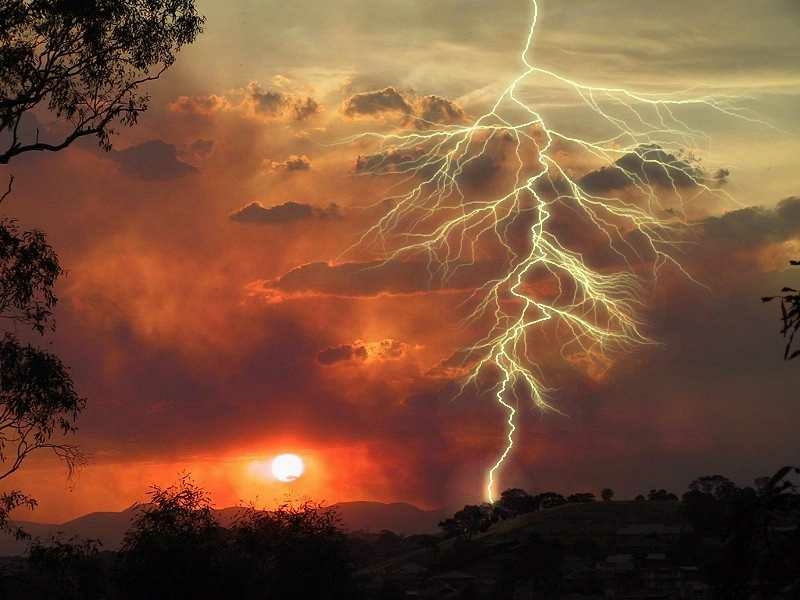
Greetings, it has been raining here in Greater Vancouver quite a bit, which is common. I therefore thought I would post a stormy photo. I do not know where the photo was taken.

I do not have delusions of grandeur, and I realize that this a small blog. I am not a professor as of yet, but I am close to finishing my PhD, and with God's help I present well reasoned articles. I write as a conservative, but use liberal sources as well, and I am attempting to be objective in my writing. I am my own worst critic and make many changes to my articles. I view them as all open to alteration, other than my MPhil which has been published by Wales, but even that has amendments to it in the comments. I appreciate those of you who check up on my work occasionally, and as well those who comment respectfully and intelligently.

I am back working with an advisor at Wales, which is a relief because I have been without one since March. This means that my postings on thekingpin68 will become less frequent, just as they were while I was preparing my four chapters on theodicy (the problem of evil). If you look at when my articles were published you can pretty much deduce when I have been busier with my PhD writing. However, please continue to check this blog, because I will present some work here. My new advisor is reviewing the chapters which had been accepted by the previous advisor. We are also working on the questionnaire/survey, and any person attending a Christian church who is interested in assisting with the survey, please leave a message in the comments in the following article, or in the comments with this article.

http://thekingpin68.blogspot.com/2006/09/questionnaire-assistance.html

As well, if you so desire, please email me at
rnmwales@shaw.ca in regard to filling out a survey when it is ready.

Some of you may realize that I have a second blog which is in the links. Satire and theology has articles which are generally shorter than on this one, but they often contain theological reflections on serious topics. There will be more postings on satire and theology than thekingpin68, because the satire and theology articles are generally easier to write. I did a recent article on there which those of you who like my writings here may appreciate. It is my second article on satire and theology which I have done with the use of information provided by religious facts.com.

http://satireandtheology.blogspot.com/2006/10/new-testament-manuscripts_31.html

I have also recently been involved in a short, non-exhaustive debate on another site in my links, which you may find interesting. The debate is in the comments of that article.

http://mormonismreviewed.blogspot.com/2006/11/joseph-smiths-bible-part-2.html

Thanks greatly

Russ:)

Friday, November 03, 2006

Eternal vs. Everlasting

Yahoo Images 

Eternal vs. Everlasting 

Interestingly in New Testament Greek according to J. Strong’s Exhaustive Concordance of the Bible, the same Greek word can be defined in English as either eternal or everlasting. The Greek word aíwvios (aionios) is explained as meaning perpetual, used of past time or past and future as well, eternal, for ever, and everlasting. Strong (1986: 8). Strong provides only one word for eternal or everlasting from the New Testament. Walter Bauer notes that in Romans 16: 25, a form of the word is used to describe a mystery of long ages ago without beginning. Bauer (1979: 28). In Hebrews 9: 14, a form of the word is used to describe the eternal Spirit and is mentioned as existing without beginning or end. Bauer (1979: 28). 

In Mathew 19: 29, Jesus discusses those that shall inherit everlasting life, and the word is used in a form that describes life existing without end. Bauer (1979: 28). The first verse appears to be describing a mystery that always existed with God, and in the second verse it mentions the Spirit of God that has always existed, and did not begin and will not cease. In the third verse the life Jesus discusses did not always exist, but everlasting life shall be given to some by God. There is a clear philosophical difference between the first two meanings and the last one. The first two examples, in my view, are describing aspects of the eternal God. Something which is eternal according to Simon Blackburn is not moving, and is beyond time, whereas the third example in light of Blackburn's definition is describing something that is everlasting and running within time. Blackburn (1996: 126). 

In the first two usages of the word the idea being put across is that the mystery existed within the mind of the eternal God, and that God’s Spirit was eternal. God is eternal, as in without beginning or end and is beyond time. Grenz, Guretzki, Nordling (1999: 47). The third verse is not describing eternal life, but everlasting life which has a beginning but no ending. The everlasting life of those in Christ is not eternal, but exists within time and continues to run within time and therefore this life should be properly defined as everlasting life as opposed to eternal life. This philosophical difference is why in my writings I only use the term eternal in the context of God and use the terms everlasting life, everlasting existence, or everlasting punishment when mentioning God’s created beings which exist in time. I am not trying to split hairs here, but rather wish to attempt to define my terms as properly as possible in order to avoid related theological and philosophical difficulties through the use of terminology in the future. 

This is not to deny some of the theological concepts which scholars and students use with the concept of eternal life. One student mentioned to me, while I lived in England, that we as Christians will share in the eternal life of God in the culminated Kingdom of God. I agree that we shall exist with God and experience his existence, but technically speaking he has eternal life, and we shall have everlasting life. God alone has always existed and therefore has eternal life. J.F. Walvoord notes that eternal life in Scripture is contrasted with physical life, and I completely agree. Walvoord (1996: 369). Whether the term is translated as eternal or everlasting life, I agree that it is the life that is opposed to physical temporal life from a Scriptural perspective. I would also add that it is contrasted with everlasting punishment for unbelievers. Whether we call it eternal or everlasting life it can only be found through Christ according to the Biblical account. 

BAUER, W. (1979) A Greek-English Lexicon of the New Testament, Translated by Eric H. Wahlstrom, Chicago, The University of Chicago Press. 

BLACKBURN, S. (1996) ‘Eternity’, in Oxford Dictionary of Philosophy,Oxford, Oxford University Press. 

GRENZ, STANLEY J., DAVID GURETZKI and CHERITH FEE NORDLING (1999) Pocket Dictionary of Theological Terms, Downers Grove, Ill., InterVarsity Press. 

STRONG, J. (1986) Strong’s Exhaustive Concordance of the Bible, Pickering, Ontario, Welch Publishing Company. 

WALVOORD, J. F. (1996) ‘Eternal Life’, in Walter A. Elwell (ed.), Evangelical Dictionary of Theology, Grand Rapids, Baker Books.

London, Greenwich

Saturday, October 14, 2006

Infinite


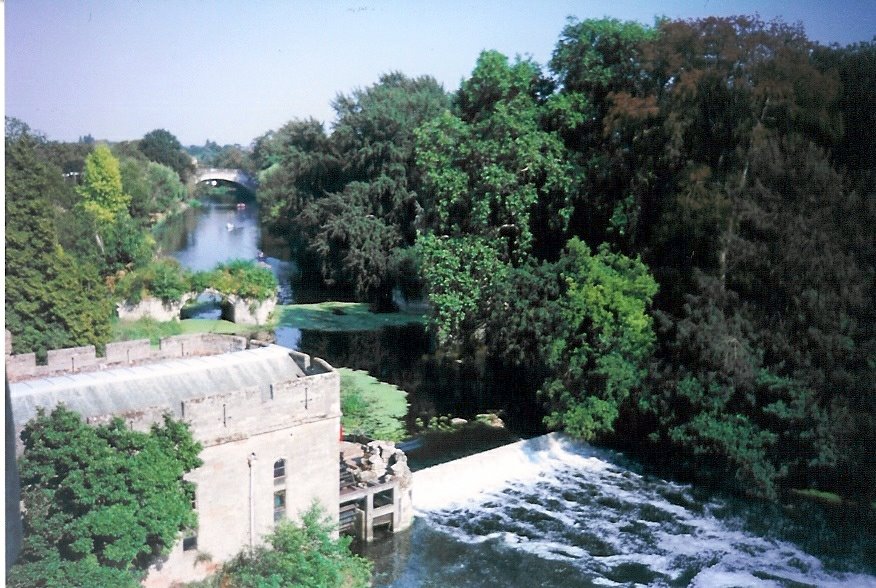
Warwick Castle, England

Throughout my writing I mention that within Christianity the God of the Bible is understood to be infinite. Here are some quotes and explanations from my library of what that means.

Brian Davies writes that the English word infinity comes from the Latin word infinitas, meaning boundless or endless. Davies (1999: 298). Davies states that some have ascribed the term infinity with various degrees of understanding of substance, time, space, the universe, numbers, and classes. Davies (1999: 298). Davies mentions that many philosophers have dealt with the issue of infinity through the centuries, but Biblically speaking there is not a doctrine of infinity. Davies (1999: 298). I can give Davies this point if by this he means that within Scripture there is not a specific explanation of a doctrine of the infinite God. Davies writes that God's infinity is viewed as marking his perfection, and that God alone is understood as infinite. As God is uncreated and uncreatable, he is infinite. Davies (1999: 298). God would not be limited by time and space, and so contrary to the previous comments time and space would be considered finite and not infinite within traditional Christian thought. God would be superior to all creatures and would be omniscient, omnipotent, omnipresent, and eternal. Davies (1999: 298). Davies notes that process theology has postulated that God's personal nature means that he can change as he works within created time. Davies (1999: 228). Process theology reasons that God possibly develops in personality as he deals with his created beings. Davies (1999: 228).

I would state that if God's nature can be changed and develop within time, then he is not infinite, but rather the most advanced finite being in existence. A finite being that is beyond matter, perhaps. I reject process theology's notion of a finite God, for at least the following reasons.

1. If God is not infinite then he cannot posses any infinite attributes, and this would prohibit God from being eternal. To be eternal would mean that one has unlimited life. If God is not eternal, then how did God come to exist? If there was a God that created God and so on, we have the problem of vicious regress in which we are stuck with an infinite regressions of Gods. If it is suggested at some point the regression ends, why cannot we simply reject the vicious regress and state that the Biblical God, or a God, is the only God? To state that God simply came to exist from nothing does not seem reasonable, and the suggestion answers nothing. If God is merely finite, then we have a problem of determining the first cause.

2. Many scientists and scholars reason that the universe is 15-20 billion years old, and believe in a 'Big Bang Theory'. Whether the universe is billions, millions, or thousands of years is not the primary concern of this article, but with a big bang model or like, the universe in agreement with the Bible, is not eternal. Billions, millions, or thousands of years is more time than any of us can comprehend and may be considered perhaps from a human perspective, virtual eternity, but is not actual eternity, and therefore is not infinite. Since God created matter, time and space in Genesis, Chapter 1, it is clear that nothing within the material, physical realm existed prior to creation. This would leave us with God, and perhaps the angelic beings prior to the existence of matter, time and space. It can be deduced that angels cannot be infinite in nature, because if they were limitless in nature they would themselves be God. We cannot have two or more limitless beings by definition as they simply would be an aspect of one infinite, eternal God of one substance. Thiessen notes angels are not eternal although the Bible does not state when they were created. Thiessen (1956: 191). Thiessen thinks angels may have been formed at the Genesis 1 creation or just after. Thiessen (1956: 191). I would of course have no definite idea, but think that angels were created within time. I do not reason that angels existed in a timeless state with God. I would deduce that even non-physical finite spiritual beings must exist within time, although not necessarily within physical matter and space, in order to process thought patterns, as God alone is all-knowing and does not need to process thoughts within time. I would conclude this point by stating that God alone existed before the creation of matter, time and space and angelic beings. Note, as angelic beings are finite, they would exist within time, but not solar time as they exist in a non-physical, spiritual reality.

3. Millard J. Erickson discusses the Scriptural concept of God's existence in contrast to that of his creation. In Acts 17: 24-25 it states that God does not dwell physically, but is the creator of everything. Erickson notes that God is called the first and last in Isaiah 44: 6, and the Alpha and Omega in Revelation 1:8, 21:6, and 22:13. The idea being shown here is that God has always existed and will always exist. Erickson (1994: 273-274).

As pointed out previously, before the creation of matter and the angels nothing else would have existed. There is also the idea put across in Scripture that God is immutable and does not change in his nature. Malachi 3:6 states that the Lord does not change and Erickson views this as referring to God’s nature and attributes.

It can be stated here that the God of the Bible is not pantheistic as the creator is totally independent in nature from his creation. Erickson (1994: 303). God existed before the creation of matter, time and space as a purely spiritual being, and was not dependent on matter, time and space or anything other than himself for existence. God is not equal to his creation or matter, time and space he is beyond it. God is also not to be considered in a panentheistic context as although the creator does sustain all of his creation through his power he is not the vital force within all he creates. Erickson (1994: 307). God in pantheism may be considered to be equal with a tree. God in panentheism may be considered beyond the tree, but the vital force within it, where as in my view a traditional Christian understanding would be that God is beyond a tree and sustains it, but is not the vital force within it. If God is the vital force within a tree, it could be argued that the tree’s essence is infinite and eternal and I think that this would be error. In contrast, I think that God sustains and energizes all of his creation while allowing it existence separate from his own. The tree remains finite although it is sustained by God. When the tree dies so does its essence, although the related finite matter continues to exist.

God and not his creation, is alone infinite.

DAVIES, BRIAN (1999) ‘Infinity’, in Alan Richardson and John Bowden (eds.), A New Dictionary of Christian Theology, Kent, SCM Press Ltd.

ERICKSON, MILLARD (1994) Christian Theology, Grand Rapids, Baker Book House.

THIESSEN, HENRY C. (1956) Introductory Lectures in Systematic Theology, Grand Rapids, Wm. B. Eerdmans Publishing Company.