Wednesday, April 11, 2012

Key Theodicy Related Texts (From Theses)

Key Theodicy Related Texts (From Theses)

Revised November 1, 2021, reformatting due to Blogger template updates

I have summarized theodicy material from various posts with new book cover graphics to create something different. I actually discovered in the process that 'The Many Faces of Evil' is now back in print in a new version and ordered it from Amazon.

It actually was out of print during my MPhil/PhD theses work and I had a photo copy. That was not good to work with as a primary source for a PhD thesis. The books are not ordered in any way... 

PLANTINGA, ALVIN C. (1977)(2002) God, Freedom, and Evil, Grand Rapids, Wm. B. Eerdmans Publishing Company. 

Plantinga successfully demonstrates that a free will defence is logical and reasonable. Plantinga (1977)(2002: 28). He speculates that the price of God creating a universe with significantly free creatures is that wrong actions will inevitably occur leading to the problem of evil. Plantinga (1977)(2002: 30). Plantinga’s free will approach is not primarily theological as is Augustine’s and therefore offers a different but somewhat related perspective. 

The question does arise if Plantinga has really successfully answered the objection of theistic critics such as Feinberg, and atheists such as J.L. Mackie on why God could not simply create human beings who were significantly free and never committed wrong actions. 

I reason in my PhD and on my website work that God could have created significantly free human beings, or at least human-like creatures that only committed right actions. Perhaps God desired to create human beings that would ultimately possess a greater spiritual maturity than Adam and Eve prior to the fall because those restored in Christ would have experienced sin, the problem of evil, death and the atoning work and resurrection of Christ. 

Quite possibly restored human beings would ultimately be more spiritually mature and valuable to God than persons that never knew what it was like to disobey God and experience evil. I would also point out that Biblically speaking the angels that did not fall would seemingly be significantly free and have not committed wrong actions.

BLACKBURN, SIMON (1996) Oxford Dictionary of Philosophy, Oxford, Oxford University Press.

This was very helpful to me in working through material that was primarily within the Philosophy/ Philosophy of Religion discipline, while working within Wales' Religion and Theology departments. My theses were as much Philosophy of Religion as Theology.   

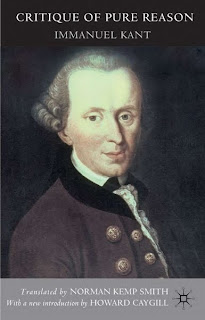
KANT, IMMANUEL (1781)(1787)(1929)(2006) Critique of Pure Reason, Translated by Norman Kemp Smith, London, Macmillan.

KANT, IMMANUEL (1788)(1997) Critique of Practical Reason, Translated by Mary Gregor (ed.), Cambridge University Press, Cambridge. 

KANT, IMMANUEL (1788)(1898)(2006) The Critique of Practical Reason, Translated by Thomas Kingsmill Abbott, London, Longmans, Green, and Co. 

Kantian philosophy originates from philosopher Immanuel Kant (1724-1804). It would take years of research to become a scholar of Kant, it is complex material. In his Inaugural Dissertation of 1770, 

Kant provides the idea that persons can only have a priori knowledge of space and time by the use of forms of the mind, which are imposed by human experience. 

With the Introduction to Kant’s Critique of Pure Reason, he noted that a priori knowledge originates independently of senses and experience. In the Critique of Pure Reason of 1781 and revised in 1787, Kant explains that the forms of appearance from which sensations can be understood are not themselves the empirical sensations. 

Human experience will determine the method and forms by which particular things are understood by what Kant calls pure intuition. Concerning human experience, Kant reasoned categories are applied to objects not because the objects make the categories possible, but rather because categories themselves provide and constitute necessary conditions for the representation for all possible objects of experience. 

Therefore any human understanding of metaphysical reality would not be comprehended by empirical knowledge in a posteriori sense. Kant reasons objects that were present in empirical human experience were in the phenomena realm, while objects outside were the noumena realm. 

He writes that the contingent things experienced by persons are phenomena. These are things that could be experienced empirically and would be reasonably accepted as reality. The noumena realm was not available to empirical senses. 

Kant explains in a follow up work entitled The Critique of Practical Reason from 1788, that the noumena is the theoretical department of knowledge denied, while the phenomena is one’s own empirical consciousness. All positive speculative knowledge should be disclaimed for the noumena realm according to Kantian thought. Kant concludes 

The Critique of Practical Reason by noting that the phenomena realm is the external realm where consciousness has existence. The noumena realm is invisible and has true infinity where Kant believes one can reason that contingent personality is dependent on the universal and necessary connection to the invisible world. 

FRAME, JOHN M. (2002) The Doctrine of God, P and R Publishing, Phillipsburg, New Jersey. 

PHILLIPS, D.Z. (2005) The Problem of Evil and the Problem of God, Fortress Press, Minneapolis. 

The late D. Z. Phillips was what I found to be an intelligent and interesting, educated, critic of traditional Christianity, although he did not change my Reformed views on God's omnipotence, for example. I was required by my PhD examiners to focus on more of this philosopher's work for my PhD revisions. 

Phillips argued God was not omnipotent because he could ride a physical bike as was discussed in one of the archived posts that also had an audio version. I agree with Phillips that it is not illogical for God as spirit to ride a physical bike. 

But he reasons God is therefore not omnipotent as God cannot ride a bike. In a sense God as spirit could move the bike as if it was being ridden by a person and it could be considered ridden, although strictly speaking he would not be sitting on it and riding it. 

This first suggestion would not satisfy many critics, but may satisfy some theists in particular. I can see the point that some may suggest, that it would be illogical for a being of spirit only to do anything physical. But in regard to God I lean away from this view because of my suggestions and because it appears to limit God from logically acting in the physical universe which the infinite, omnipotent God should be able to do and did in Scripture.

I therefore offer the suggestion in agreement with John Frame (I read Frame after I had come to the similar conclusion) that God could remain as spirit in nature only and yet still temporarily take some type of physical form to ride the bike/do a physical action (Phillips suggests bicycle and not Frame). 

This would not be the same as my other suggestion of Christ riding the bike, which could also be accomplished, as Christ has both the eternal nature of God in spirit and has taken human nature in the incarnation, although the two natures do not mix. 

At the same time I can grant Frame the point that God's omnipotence should not be challenged by the physical finite actions that God does not by nature do. He is correct that it is not a weakness. God is in fact beyond physical limitations.

HICK, JOHN (1970) Evil and The God of Love, London, The Fontana Library. 

Hick rejects Augustinian and Calvinistic views on theodicy, and instead supports what he views as the Irenean position. Hick (1970: 221). Hick also rejects conservative Christian doctrines and instead favours the idea of universalism. Hick (1970: 172). Hick (1970: 381). 

He reasons that human beings were made immature and capable of committing wrong human actions in order that God eventually can bring all persons to the creator through soul-making. Hick (1970: 292). 

I can deduce that some type of soul-making is used by God in the development of believers, but without the atoning work of Christ and resurrection within a Christian tradition we do not have a revealed divine means of salvation and are left to speculate on how God should or could save persons, as Hick speculates. 

By the way, I just noticed, sad to read Professor Hick passed away in February at the age of 90.

CALVIN, JOHN (1543)(1996) The Bondage and Liberation of the Will, Translated by G.I. Davies, Grand Rapids, Baker Book House. 

Technically not a text directly concerned with theodicy or with the problem with evil, but the text is concerned with concepts of free will and determinism which are connected to modern concepts of compatibilism and incompatibilism. 

The text would be very historically influential in the development of Reformed Biblical concepts of compatibilism/soft-determinism. I found it very useful and it guided me as did Feinberg's book.

He wrote in 1543 in The Bondage and Liberation of the Will. 'If freedom is opposed to coercion, I both acknowledge and consistently maintain that choice is free and I hold anyone who thinks otherwise to be a heretic. If, I say, it were called free in this sense of not being coerced nor forcibly moved by an external impulse, but moving of its own accord, I have no objection.' Calvin (1543)(1996: 68).

FEINBERG, JOHN S. (1994) The Many Faces of Evil, Grand Rapids, Zondervan Publishing House. 

Within this text Feinberg presents a defence which could be labeled a sovereignty theodicy. My personal sovereignty theodicy is embedded within my MPhil and more so my PhD and is somewhat similar to Feinberg’s work. 

As well as presenting his own perspective Feinberg does a thorough job of reviewing various theistic and atheistic concepts on the problem of evil. He reasons that God does not presently eliminate the problem of evil because to do so would violate divine plans and human development. Feinberg (1994: 130). His work influenced my own significantly in regard to the development of concepts on compatibilism, incompatibilism, and theodicy.  

AUGUSTINE (388-395)(1964) On Free Choice of the Will, Translated by Anna S. Benjamin and L.H. Hackstaff, Upper Saddle River, N.J., Prentice Hall.

Within On Free Choice of the Will, Augustine presents his free will theodicy, theodicy being an explanation for the problem of evil in a theistic universe. Augustine was somewhat influential on Alvin C. Plantinga’s free will defence in the 1970’s. Plantinga (1977)(2002: 26).

Augustine reasons that God is not the cause of evil, but rather human beings create the problem when they choose to follow their own temporal ways rather than God’s. Augustine (388-395)(1964: 3). A possible problem with Augustine’s view is that he blames the problem of evil on human choice but at the same time places a heavy emphasis on God’s sovereignty in creation. 

Augustine’s view on human free will appears libertarian while, as John Feinberg points out, Augustine’s concept of God’s sovereignty would seemingly require some form of determinism. Feinberg (1994: 98). 

Sunday, April 01, 2012

Panentheism (PhD Edit)/iTunes Personally Evolving Toward Classical


London, Greenwich (trekearth.com)

March 26, 2012

Panentheism


Process theism approaches are sometimes referred to as being panentheistic.[1] The two approaches are not identical but process theism moves in the direction of panentheism.[2] David H. Nikkel (2003) defines panentheism as from the Greek meaning ‘all is in God.’[3] Both God’s transcendence and immanence are accepted, as the world and matter is in God, and God is ‘all-encompassing with respect to being.’[4] Panentheism is not identical to pantheism which postulates that ‘God is identical with everything’[5] or that God is in everything and that God and the universe are one.[6] The difference being that panentheism understands ‘God is in all things’[7] but not identical with all things as with pantheism.[8] As example, God in pantheism may be considered to be equal with a tree. God in panentheism may be considered beyond the tree, but the vital force within it, where as in my traditional Christian theistic understanding God is beyond a tree and sustains it, but is not the vital force within it.[9] Panentheism attempts to ‘avoid the pitfalls’ of traditional theism.[10] God is prohibited from having a true and genuine relationship with matter and the universe because of traditional theistic views such as that God is immutable, impassible, and eternal and timeless.[11] Panentheism is an intellectual compromise between traditional theism and pantheism.[12] God is more than just the material universe, as there is an unchanging aspect to God’s being and also a dynamic aspect to God as the divine being changes as matter and the universe do.[13] German philosopher, F.W. J. Schelling [14] (1845)(1936) reasons: ‘As there is nothing before or outside of God, he must contain within himself the ground of his existence.’[15] He reasons God’s nature is inseparable from God and yet can be distinguished.[16] Panentheism can reasonably be understood as an overarching view within many process theism approaches[17] which I have contrasted with my own views.[18]


[1] Geisler (1975: 153).
[2] Grenz and Olsen (1992: 142). I am not stating that this is the case in every documented view of process theism, but it is generally true that the two views are closely related.
[3] Nikkel (2003: 1).
[4] Nikkel (2003: 1).
[5] Martinich (1996: 556).
[6] Blackburn (1996: 276). Blackburn also explains Benedictus de Spinoza (1632-1677) is noted for this view within Western philosophy
[7] Martinich (1996: 556). The doctrine that all things exist in God. Kreeft and Tacelli (1994: 94).
[8] Martinich (1996: 556).
[9] This is my example based on Erickson’s presentation. Erickson (1994: 303-307).
[10] Nikkel (2003: 1). Many modern theologians and philosophers now question the concept of an eternal God. Kreeft and Tacelli (1994: 94).
[11] Nikkel (2003: 1). God is not eternal within this view. Kreeft and Tacelli (1994: 94).
[12] Kreeft and Tacelli (1994: 94).
[13] Kreeft and Tacelli (1994: 94).
[14] Schelling lived (1775-1854). Blackburn (1996: 341).
[15] Schelling (1845)(1936: 32).
[16] Schelling (1845)(1936: 32). Schelling sought to deflect criticisms that he was a pantheist. ‘Unity is of essence, but so is diversity.’ Gutmann (1845)(1936: xxxi). However, his comments make it possible that he had views which were perhaps panentheistic. Material things are dependent on God and yet independent.
[17] Including that of Whitehead. Nikkel (2003: 2-3). Grenz and Olsen (1992: 142).
[18] My views are Reformed but not strictly within a certain camp such as Presbyterian or Baptist. I have primarily come to my Reformed views through MPhil and PhD research.

BLACKBURN, SIMON (1996) Oxford Dictionary of Philosophy, Oxford, Oxford University Press.

ERICKSON, MILLARD (1994) Christian Theology, Grand Rapids, Baker Book House.

GEISLER, NORMAN L. (1975) Philosophy of Religion, Grand Rapids, Zondervan Publishing House.

GRENZ, STANLEY J. AND ROGER E. OLSON (1992) Twentieth Century Theology, Downers Grove, Illinois, InterVarsity Press.

GUTMANN, JAMES (1845)(1936) ‘Introduction’ in SCHELLING, F.W.J. (1845)(1936) Schelling, Of Human Freedom, Translated by James Gutmann, The Open Court Publishing Company, Chicago.

KREEFT, PETER and RONALD K. TACELLI (1994) Handbook of Christian Apologetics, Downers Grove, Illinois, InterVarsity Press.

MARTINICH, A.P. (1999) ‘Pantheism’ in Robert Audi, (ed.), The Cambridge Dictionary of Philosophy, Cambridge, Cambridge University Press.

NIKKEL, DAVID H. (2003) ‘Panentheism’, in Encyclopedia of Science and Religion, MacMillan Reference USA, New York.

SCHELLING, F.W.J. (1845)(1936) Schelling, Of Human Freedom, Translated by James Gutmann, The Open Court Publishing Company, Chicago.


Fire Lake, BC (trekearth.com)

Sole Porto Ferraio, Italy (trekearth.com)

Yahoo Background Image

iTunes Personally Evolving Toward Classical


My former desktop and PhD computer had been infected via YouTube with Zero Access RootKit viruses as discussed on the satire and theology blog. This required a Windows operating system reformat and a reloading of the one week plus worth of songs on iTunes. I have a decent collection of compact CDs from rock (progressive, art), jazz (fusion) and classical music. This has been a collection I have gathered slowly over the years, mainly several years ago. There was then a power outage in our building and I went to visit my Mother in the hospital. I arrived home and the power was restored but a power surge had destroyed the motherboard/mainboard on my desktop computer. I was forced to replace my computer and decided to buy my first modern notebook. My iTunes were of course lost. I am presently at the one week point at reloading iTunes as I type this post. This is just a ‘best of’ from my collection and selection from most discs, I rarely will copy entire discs. That is how I prefer to listen to music. I then set iTunes to random.

I rarely purchase CDs now and when I do they are primarily classical discs. Also the prediction I made to Uncle Chuck about fifteen years ago is basically true. I stated that based on the music trends of the time I would primarily run out of interesting progressive, innovative music to collect in the rock and jazz genres and start collecting more classical discs. Basically from the 1990s onward formerly progressive more innovative rock and jazz artists from the 1970s and 1980s tended to resort to playing for marketing purposes more typical rock, or more typical jazz, and I am not usually interested in such but like rock fusion, more commonly known as progressive rock and jazz fusion. These tend to be more innovative and complex. Also I suppose it would be difficult in today’s music scene for a new music act to make it in rock or jazz commercially performing progressive, fusion music that was not considered mainstream or within one genre.


The issue of secular lyrics has never been an important for me as an adult. For one, I have never paid much attention to them. Two, I am in agreement with a former professor from Columbia Bible College that there is no solid proof that hearing lyrics that one disagrees with in music will necessarily influence a person’s views for the negative. In fact, he suggested it might just as easily have the opposite effect of putting the listener against what the artist is stating.


As well, after four degrees and in particular two secular theses degrees focusing on theodicy, the problem of evil within Philosophy of Religion and Theology, there were many things I read that I disagreed with, and it is quite frankly possible to enjoy aspects of an author while disagreeing with other aspects. This is so even with atheists and critics of Christianity. It also possible to learn from someone that has a different worldwiew on some specific points. So, one could potentially listen to an artist for the musicianship and enjoy it while disagreeing with some of the lyrics. However, as noted in my case I think lyrics have little overall impact.


I prefer how much less in price most classical discs are compared to other genres of music. I suppose the older classical music is considered public domain and there is no estate to collect royalties. 'Newer' recordings of these artists would have copyrights by record companies and orchestras but not necessarily the estates of these artists.


Saturday, March 03, 2012

Philosophical & Theological Ponderings


Greece via email

Philosophical & Theological Ponderings on Prayer and Action

The Importance of Prayer

W.R.F. Browning

Prayer is the act of communicating with God in words or in silence, as in conversation between persons and the transcendent God. Browning (1997: 300). It is not regarded as a method of compelling God to do something primarily, but rather is asking that God's will be done and that his Kingdom arrive. Browning (1997: 300).

James Montgomery Boice

Prayer is a privilege, to speak with God.
Christians resist the evil one and his partners.
Things are requested from God.
It is central to the Christian life Biblically.
Prayer was essential to Christ and therefore naturally should be essential to believers.
God provides mercy through prayer.
God provides joy via prayer.
God provides peace from anxiety with prayer.
The Holy Spirit is granted with prayer.
Prayer is a means by which the Second Coming is to be measured, and the Church alert.
The growth of the Church is developed via prayer. Boice (1981: 483-484)

Millard Erickson

Prayer is more than self-stimulation, it is more than positive mental attitude, instead it is a right attitude in regard to God's will. Not so much what persons would like done, but the attitude that God's will should be done. Persistent petition to God for human desires and wishes is important but the goal should be that it be along the will of God. Erickson lists the Lord himself, Jesus Christ, and the Apostle Paul as two Biblical examples of those that prayed to God to have sufferings lifted but did not have sufferings removed. Erickson (1994: 406).

End citations

I am in basic agreement with the citations. As a Reformed theologian, I hold to compatibilism/soft-determinism. The opposite would be incompatibism as in all human actions are free if a person could have done otherwise. Indeterminism is also equated with incompatibilism which states that God, or any other being, cannot cause by force or coercion any human action, nor can any action be simultaneously willed by God or any other being, for the human action to remain significantly free. Compatibilism, which I hold to, would agree with incompatibilism that God or any other being cannot cause by force or coercion any significantly free human action, but contrary to incompatibilism thinks that God can simultaneously will significantly free human actions.

When a person prays that would be a secondary cause and God the primary cause of thoughts and actions. Because I am not a hard-determinist, but a soft-determinist, I still hold to human beings as a secondary cause as long as they are morally responsible for thoughts and actions.

There is a potential danger related to prayer, not too much prayer, but prayer not connected to action.

I state this because I hear and read in different Church contexts with different persons 'I will pray for you', which is a good thing, a fair amount in Western culture within the Church, but is it possible that at times prayer is replacing needed action in personal lives and ministry.

For example:

I reason in regard to potential actions resulting from prayer:

'Maybe later' as a philosophical thought or statement means many times it will never happen.

'Maybe when I am older' as a philosophical thought or statement means many times it will never happen.

'Someone else will perform that right action in regard to that person' as a thought or statement.

This may very well not occur because other like persons may use similar reasoning within the same culture within similar circumstances.

The solution would seem to be that when guided by God to pray on certain serious issues to follow-up with action, not only to continue in prayer.

Philosophical & Theological Ponderings on Natural Theology

This is edited from some comments I made on another academic theology blog in regard to Natural Theology, which I admit I am not expert on and the blogger is writing a series. I however, did come across the topic within my PhD research with philosophers such as Geivett, Plantinga, Hick and others and did use academic sources in reply....

I do not think Natural Theology is primarily, or only a discipline of apologetics. But would be of the discipline of theology as well. And it could be dealt with in philosophy as in see Geivett’s book ‘Evil and the Evidence for God’ and see also Plantinga ‘God, Freedom and Evil’.

From Grenz, Guretzki and Nordling:

Natural Theology maintains that humans can maintain particular knowledge about God through human reason by observing the created order as one locus of divine revelation. Dictionary of Theological Terms. Grenz, Guretzki and Nordling. (1999: 82).

Millard Erickson discusses Romans 1-2 with Natural Theology in his text 'Christian Theology' when he favours Calvin's views over those of Barth and Thomas and states that Paul asserts that persons do not clearly perceive God in general revelation. Sin marred this general revelation. General revelation does not allow the unbeliever to know God. Erickson notes that there is nothing within Scripture that would be a formal argument for the existence of God from evidences within general revelation. Thus the conclusion from Erickson is that a general revelation cannot be used to construct a natural theology. Erickson (1994 168:171).

I agree with Calvin and Erickson concerning their conclusions concerning the state of humanity:

I do reason that Natural Theology and Revelation (Romans 1-3 for example) has its place.

I am not clearly suggesting that a general revelation must or would construct a natural theology, but after looking through Geivett’s book for my PhD work, for example, I do think that Scriptures such as Romans 1-3, and Romans 1, in particular, could possibly philosophically influence a non-believer in regard to let us state a very limited natural theology. From a Reformed, Biblical perspective it is of course up to the Holy Spirit of enlighten a person. We know that God uses many things in that process (preaching, Scripture, Bible, etc.).

So, further from what I posted on the other site. I accept the Biblical, Reformed position that non-believers cannot know God merely by evidence of creation, as in general revelation, because the human knowledge of God discussed in 1: 21 is not a general knowledge of God. Cranfield (1985)(1992: 32). God has always been self-disclosed but humans beings have not allowed themselves to see him. Cranfield (1985)(1992: 32). They have known him, according to Cranfield in the sense of experienced him all their lives, he has sustained them, but this is not personal knowledge. It is only to 'know' God in a limited sense'. Cranfield (1985)(1992: 32).

In his commentary Mounce explains that 'Understanding God requires a moral decision, not additional information'. Mounce (1995: 79).

Therefore, again I am in agreement with Calvin and Erickson that Scripture and in particular Romans 1-3, in particular, Romans 1 demonstrates that the corruption of humanity, and that building a general revelation to a natural theology is troublesome and that God cannot be known this way. I have of course on this blog steadfastly taken a Reformed compatiblistic stand.

I am stating that God can use Romans 1-3, in particular Romans 1, in conjunction with nature/creation in influencing a non-regenerate person to consider the gospel. This could be considered in a limited sense natural theology. This could also within a Reformed, Biblical model eventually be an influence in the election of some in Christ (Ephesians 1, Romans 8).

BOICE, JAMES, MONTGOMERY (1981) Foundations of the Christian Faith, Downers Grove, IVP Press.

BROWNING, W.R.F. (1997) Dictionary of the Bible, Oxford, Oxford University Press.

CRANFIELD, C.E.B. (1985)(1992) Romans: A Shorter Commentary, Grand Rapids, William B. Eerdmans Publishing Company.

ERICKSON, MILLARD (1994) Christian Theology, Grand Rapids, Baker Book House.

GEIVETT, R. DOUGLAS (1993) Evil and the Evidence for God, Philadelphia, Temple University Press.

GRENZ, STANLEY J., DAVID GURETZKI AND CHERITH FEE NORDLING (1999) Pocket Dictionary of Theological Terms, Downers Grove, Ill., InterVarsity Press.

MOUNCE, ROBERT H. (1995) The New American Commentary: Romans, Nashville, Broadman & Holman Publishers.

PLANTINGA, ALVIN C. (1977)(2002) God, Freedom, and Evil, Grand Rapids, Wm. B. Eerdmans Publishing Company.

Wednesday, February 15, 2012

Notes on the Incarnation


Kassel, Germany (trekearth.com)

Introduction

December 19, 2005

My first post with my new notebook.

This is a repost with edits of a post from the blog when it was called thekingpin68 and I did not receive many comments. The original features a classic troll attack in comments from someone from California. I will share here to be nice and save you from clicking if you wish...

'what an absolute perfect blog of spiritual self indulgence...
I have NEVER read so much INTELLECTUAL TWADDLE in my LIFE [ and i have beem around a LONG time.
whew!!!!!!!!!!!!!!!!! you are TRULY a legend in your own mind!!!!!!
thanks for sharing.'

For those of that read my work and are not too sure about me, yes I am a legend in my own mind, I told me so. Actually, I still have a lot to learn as a child of God.

The California troll of course propelled me to write for the next 7 years.;)

Thank you.

The notes with revisions...

A pastor at church asked me for some notes for his upcoming sermon.

Colossians 2:9

MARSHALL, ALFRED (1975)(1996) The Interlinear KJV-NIV, Grand Rapids, Zondervan.

2:9 ὅτι ἐν αὐτῶ κατοικεῖ πᾶν τὸ πλήρωμα τῆς θεότητος σωματικῶς,
Because in him dwells the fullness of the Godhead bodily.

WRIGHT, N.T. (1989) Colossians and Philemon, Grand Rapids, IVP.

'Bodily form' can be translated as actually or in solid reality. p.103.

The Greek word theotes (Deity) is to be distinguished from theiotes (divinity). The term for divinity could be of a lesser being than God, and Jesus is called Deity. p.103.

There is thus no need for Christian to pay homage to lesser supernatural beings. p.103.

Christ is not a second Deity. p.103.

ASHBY, E G. (1986) 'Colossians' in The International Bible Commentary, Grand Rapids, Zondervan.

Colossians 2:9

He mentions that Lightfoot thinks that the term bodily form refers to both the incarnate and glorified Christ. Others see fullness of Deity not being as much corporeally, but corporately. p.1456.

There are of course three distinctions or persons within the Trinity, but if the first interpretation is correct, somehow the Father, Son, and Holy Spirit all work together within the incarnate and glorified body of Christ. Since God has one nature (Christ has nature of Father, Hebrews 1:3) even with the distinctions within the Trinity, the Father, Son, and Holy Spirit, work together in all things including the literal body of Christ.

MARTINS, RALPH P. (1987) Philippians, Grand Rapids, IVP.

Philippians 2:6

Christ being in very nature God, refers to his pre-incarnate existence. p.100.

Being in a form of God could mean the essential attributes of God. p.101.

Concerning equality with God, one view is that the pre-incarnate God already had equality with God and chose not to cling to it. p.101.

Another view is that it that the pre-incarnate Christ could have claimed equality for himself but refused to do so. p.101.

I would think that the first view is the Biblical one in light of Christ being the eternal word in John 1, and claiming the eternal nature and the name of God for himself in John 8:58 (I AM).

The second view does not do justice to the Biblical text. p.101.

Perhaps although Christ was and is fully God, there was hierarchy in the Trinity before the Incarnation.

Christ was proclaimed as being equal with God by accepting his position as the incarnated, humiliated one. p.103.

HEWLETT, H.C. (1986) 'Philippians' in The International Bible Commentary, Grand Rapids, Zondervan.

Philippians 2:6

The participle 'hyparchon', means that Christ was already in existence. p.1444.

Christ was in very nature God and could not be Deity without being fully God. p.1444.

Not grasping at equality was not concerning nature, but state and circumstance according to Gifford. p.1444.

Christ would not exploit his Deity for his own advantage. p.1444.

He was concerned instead with submitting to the will of his Father in order to complete the atoning work, resurrection and culmination of the Kingdom of God.

ERICKSON, MILLARD J. (1994). Christian Theology, Grand Rapids, Baker Book House.

Implications of Christ’s Deity

Persons can have real knowledge of God when we see Christ. p.703.

Redemption is available through his death. p.703.

God and humanity can be reunited. p.704.

Persons can worship Christ. p.704.

Implications of Christ’s humanity

Jesus as a human had limited knowledge. p.711.

Some heresies

Docetism

Jesus only seemed to be human, because matter is evil, influenced by Platonic thought. p.713.

Apollinarianism

Denied the fullness of Christ’s humanity. It assumed that if Jesus had two natures that he must have both a human soul and a divine one. He saw this as absurd and thus denied that Christ had a human soul. p.714.

Erickson noted that orthodox, Biblical Christianity holds that Jesus had a human soul and divine one, yet was not two persons. In my mind this is a correct, yet difficult concept and Erickson admits that it is paradox. Jesus on the cross gave his spirit to the Father (John 19:30), so he possessed a human spirit and was fully human. My take is that in a sense there is one spirit that is a unity of both human and divine nature. It is one spirit that is a unity of two spirits, which do not mix yet work together as one place of personality. In the Incarnation, the divine nature of Christ was unified with a human spirit/nature. To say that Christ has two spirits or souls will perhaps lead some to the idea that Christ is two persons rather than one person with two natures. The human soul of Christ is unified with the divine soul of Christ, in such a way that the two natures do not mix, yet they work together as one spirit. Therefore when Christ died he did not give his spirits, but spirit. This one soul/spirit would allow Christ to be fully human, but without an active sinful nature.

So, Jesus as a human being would be like Adam before the fall. Sin would not have been within the nature of Christ, but it was not within Adam's nature before the fall either. Christ would have been tempted by sin as a human being, and if he would have been a perfect man alone he could have technically sinned. However, due to the fact the Christ was also God incarnate, and God cannot sin, I would conclude that Christ unlike Adam would not sin.

THEISSEN, HENRY, CLARENCE (1956) Introductory Lectures in Systematic Theology, Grand Rapids, Eerdmans.

Christ did not empty himself of his divine attributes but simply surrendered the exercise of them. p.296.

He quotes Strong who states that the incarnation purged depravity from Christ. p.305.

He did not have a sinful nature. Concerning Christ nature as God and man, Theissen quotes Hodge who states that Christ’s personality resides in the divine nature, not the human one. A divine person and not just a divine nature became incarnate. p.305.

This view would be contrasted by scholars such as Mounce and Cranfield:

Cranfield in his Romans commentary p.176, comments on the likeness of sinful flesh.

Cranfield states with what he thinks is the best explanation, that being that the Greek word for likeness is not to water down Christ's fallen human nature, as in being fully human, but is to draw attention that the fallen nature was assumed but Christ did not become a fallen human being.

So, unlike some views that reason Christ's sinful human nature was purged out at the incarnation, this view reasons it was there but because of his perfect obedience and I would reason deity, he did not become a fallen human being that sinned.

So, in a sense in the likeness of sinful flesh, he had fallen human nature.

In another sense in the likeness of sinful flesh, he did not have an active fallen human nature that would have led to sinful thoughts and choices.

Mounce in his Romans commentary sees it the same way on p.175-176, Christ took upon a fallen nature but did not become completely like us, as in sinners.

So, this could have occurred by having this fallen nature purged out of him at the incarnation or he could have kept the nature, but remained via the Father and Holy Spirit the perfect man and of course God and therefore essentially did not have a fallen nature which allowed him to be the perfect sacrifice.

So he would not have a sinful nature.

REYMOND, R.L. (1996) 'Incarnation' in Evangelical Dictionary of Theology, Grand Rapids, Baker Books.

Essential that the divine Logos did not take himself into union with a human person, otherwise he would become two persons, with two centers of self-consciousness. p.556.

HEBBLETHWAITE, BRIAN, 'Incarnation' in A New Dictionary of Christian Theology, London, SCM Press.

Liberal.

In modern times the doctrine of the Incarnation has been challenged by Unitarians, by deists of the enlightenment, and by liberal protestants. It is seen as mythical, and a barrier to other faiths in a pluralistic world. p.290-291.


Dryburgh, Scotland (trekearth.com)


Beyac et Cazen, France (trekearth.com)


New Lanark, Scotland (trekearth.com)


Anger, Germany (trekearth.com)

ASHBY, E G. (1986) 'Colossians' in The International Bible Commentary, Grand Rapids, Zondervan.

CRANFIELD, C.E.B. (1992) Romans: A Shorter Commentary, Grand Rapids, William B. Eerdmans Publishing Company.

ERICKSON, MILLARD J. (1994) Christian Theology, Grand Rapids, Baker Book House.

HEBBLETHWAITE, BRIAN, 'Incarnation' in A New Dictionary of Christian Theology, London, SCM Press.

MARSHALL, ALFRED (1975)(1996) The Interlinear KJV-NIV, Grand Rapids, Zondervan.

MARTINS, RALPH P. (1987) Philippians, Grand Rapids, IVP.

MOUNCE, R.H. (1995) The New American Commentary: Romans, Nashville, Broadman & Holman Publishers.

REYMOND, R.L. (1996) 'Incarnation' in Evangelical Dictionary of Theology, Grand Rapids, Baker Books.

THEISSEN, HENRY, CLARENCE (1956) Introductory Lectures in Systematic Theology, Grand Rapids, Eerdmans.

WRIGHT, N.T. (1989) Colossians and Philemon, Grand Rapids, IVP.